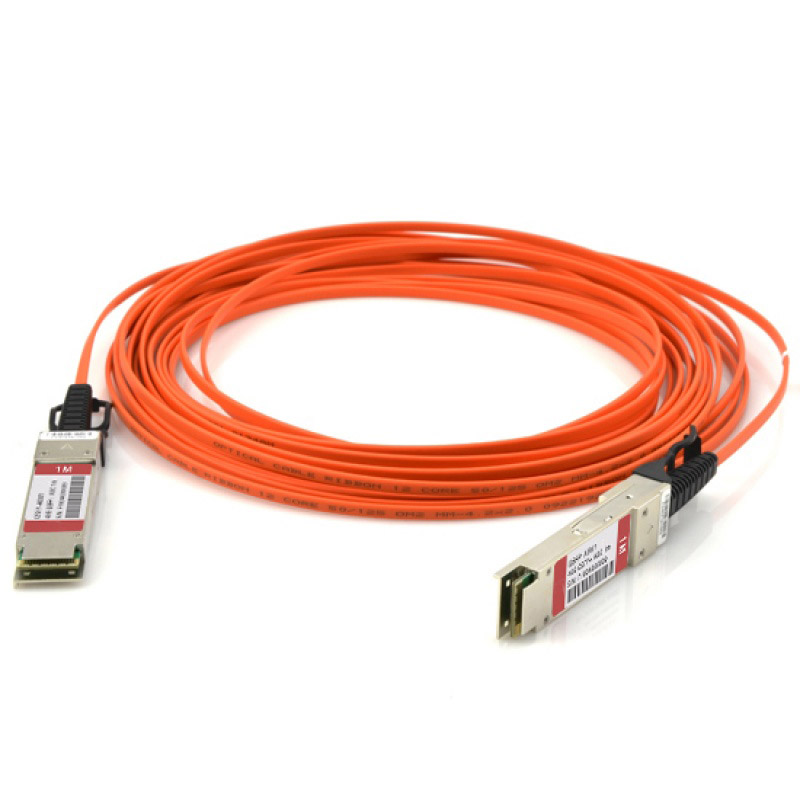
Note: 224G/448G generally refers to single-channel 224Gbps / 448Gbps PAM4 SerDes interconnection cables, mainly including Direct Attach Copper (DAC), Active Electrical Copper (AEC), Active Optical Cable (AOC), and Cable Printed Circuit (CPC) backplane solutions. They are primarily applied in AI supercomputing clusters, NVLink, and OSFP/1.6T switch interconnections.
I. Core Industry Driver: AI Computing Power Forces Interconnection Upgrade
1. Demand Source
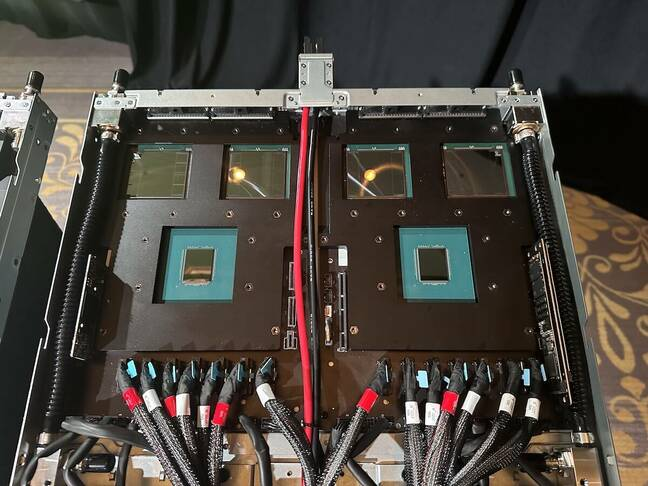
NVIDIA Blackwell (GB200/GB300) AI clusters serve as the largest market:
- The GB300 platform natively adopts 224G PAM4 interconnection to support NVLink 5.0 and 1.6T OSFP ports; the value of high-speed interconnection cables per single cabinet is approximately 200,000–250,000 US dollars.
- Positioned as the next-generation standard, 448G is compatible with NVLink 6.0, future Rubin Ultra GPU, PCIe 8.0, and 3.2T switches. It has not yet been commercially deployed on a large scale and is currently in the stage of sample verification and ecosystem construction.
2. Scenario Division (Industry Consensus: Short-distance for Copper, Long-distance for Optical)
- ≤3–5 meters (intra-cabinet, direct GPU connection): Dominated by AEC active electrical copper cables and CPC cable backplanes, featuring lower power consumption, lower latency, and obvious comprehensive cost advantages compared with AOC;
- 5–20 meters (cross-cabinet, inter-row in data centers): AOC active optical cables take the leading position;
- Traditional PCB backplanes are barely applicable for 224G, while their loss deteriorates sharply at the high frequency of 448G (≈87GHz). CPC cable backplanes have become the mainstream alternative solution.
II. Technology Iteration Timeline (Key Nodes)
1) 224G (Current Mass Production Stage)
- Standard: OIF CEI-224G with a mature ecosystem;
- Commercial Status: Global large-scale deployment from 2026 to 2027, with mass adoption by North American cloud vendors and NVIDIA GB300 clusters; domestic leading cloud vendors will launch small-scale pilots starting from the second half of 2026;
- Product Forms: 224G DAC passive copper cables, 224G AEC active electrical copper cables, 224G CPC cable backplanes, 224G AOC;
- Transmission Distance Bottleneck: Passive DAC has an extremely short transmission distance (usually <1.5m); AEC equipped with retimer chips can extend the distance to 3–6 meters, making it the fastest-growing product category.
2) 448G (Pre-research & Sample Verification, No Large-scale Mass Production)
- Standard: OIF CEI-448G is under formulation and is expected to be officially launched in 2028;
- Commercial Timeline: 2026–2027: Manufacturer sample delivery and customer laboratory verification; gradual small-scale commercialization after 2028;
- Core Challenges: The frequency rises to 87GHz, greatly raising the technical thresholds for insulating materials, impedance control, crosstalk suppression, phase offset calibration, and testing systems;
- Mainstream Solutions: 448G CPC cable backplanes outperform active AEC, while traditional passive DAC sees a sharp decline in practicability.
III. Product Route: Comparison of DAC / AEC / AOC / CPC
| Type | 224G Status | 448G Prospect | Core Advantages & Disadvantages |
| Passive DAC Copper Cable | Small-batch supply | Extremely limited application space | Low cost; ultra-short transmission distance, almost impractical for 448G scenarios |
| AEC Active Electrical Copper Cable (with Retimer) | Rapid market growth | Core short-distance solution in the medium and long term | Transmission distance of 3–6m; BOM cost restricted by retimer chips (Credo, Broadcom, etc.) |
| AOC Active Optical Cable | Mature mass supply | Persistent rigid demand for long-distance scenarios | Long transmission distance; high power consumption and unit price due to photoelectric conversion |
| CPC Cable Backplane | Demonstration deployment by leading manufacturers | Preferred architecture for 448G | Replaces traditional PCB backplanes with low high-frequency loss; high industrial barriers as a system-level solution |
IV. Market Competition Pattern
Overseas Manufacturers (First-mover advantages in high-end certification and customer ecosystem)
1. Connector & Cable System Solution Providers
Amphenol, Molex, TE Connectivity, Samtec:
- The first batch of manufacturers to complete 224G certification by NVIDIA and ultra-large-scale North American cloud vendors
- Take the lead in CPC cable backplane and 448G prototype solutions, and hold a large number of basic high-speed interconnection patents.
2. Core Chip Suppliers (Lifeline of AEC Industry)
Credo (leading SerDes/Retimer vendor), Broadcom, Marvell. Retimer chips account for 25%–35% of AEC cable costs, which is a weak link in the domestic industrial chain.
Chinese Domestic Manufacturer Tiers
1. First-tier (224G sample delivery/small-batch production + 448G synchronous R&D)
- Luxshare Technology (Luxshare Precision): Publicly demonstrated 224G CPC solutions, launched end-to-end 448G prototypes, deployed supporting cables for OSFP 1.6T, and boasts strong vertical integration capabilities;
- Zhaolong Interconnect: Achieved large-scale 112G shipments, completed 224G sample certification, and continuously delivered 448G samples. It has dual layout of DAC and AOC with outstanding overseas cloud customer resources;
- Wasion Holding (Leting Intelligent Connection): Core supplier of high-end high-speed twin cables, realizing batch delivery of 224G cables and focusing on physically foamed insulating materials;
- AVIC Jonhon Optronic: Takes a leading domestic position in 224G high-speed backplane connectors, supporting AI complete machine manufacturers and advancing 448G sample trials.
2. Second-tier (224G under R&D, supporting cable/wire components)
Haitang Electronics, Shenyu Co., Ltd., Huafeng Technology, PNA Fiber Co.,Ltd, etc., focusing on high-speed insulating wires, precision conductors, and component OEM manufacturing.
Competition Characteristics: Chinese Domestic manufacturers are catching up rapidly in cable manufacturing; overseas giants still maintain advantages in complete AEC active systems, CPC system solutions, high-end chips, and overseas customer certification.
V. Core Industrial Barriers
1. Material Barriers
High-frequency and high-speed cables generally adopt foamed FEP fluoroplastic insulation, which has long relied on imports. Domestic FEP technology has achieved gradual breakthroughs, but its long-term stability and consistency still require large-scale verification. Ultra-low dielectric loss and ultra-low roughness conductors are mandatory requirements.
2. Process Barriers
It requires precise physical foam extrusion, 92Ω differential biaxial structure, strict impedance and skew control, and ultra-fine conductors (30–34AWG). A single production line requires an investment of tens of millions of RMB with a long capacity expansion cycle.
3. Signal Integrity & Testing Barriers
Vector network analyzers above 100GHz and eye diagram testing systems are required. The investment in 448G testing equipment is much higher than that of 224G, which is unaffordable for small and medium-sized manufacturers.
4. Customer Certification Barriers
The certification cycle of NVIDIA, AWS, Meta, and Microsoft generally lasts 12–24 months, with high entry thresholds and extremely strong customer stickiness.
VI. Industrial Pain Points & Risks
1. Longer 448G Commercial Cycle Than Market Expectation
Current terminal computing infrastructure is dominated by 1.6T (224G channel) equipment. Before the large-scale implementation of 3.2T switches, customers remain cautious about capital expenditure, and large-scale 448G orders are likely to be postponed until after 2028.
2. Downward Price Pressure
After the mass production of 224G products, the entry of multiple domestic manufacturers has led to a continuous decline in average selling price (ASP) and shrinking gross profit margin for simple cable OEM manufacturing. Enterprises with complete AEC and CPC solution capabilities show stronger profitability resilience.
3. Uncertainty in Technical Routes
Continuous advancement of Co-packaged Optics (CPO) will divert part of long-distance interconnection demand in the medium and long term. However, the industry reaches a consensus that copper cables and AEC cannot be completely replaced by CPO in intra-cabinet short-distance scenarios.
4. Upstream Chip Supply Constraints
High-end retimer chips are almost monopolized by overseas manufacturers, restricting the cost competitiveness of domestic AEC solutions.
VII. Future Development Trends
1. Product Structure Upgrade: The proportion of passive DAC will decline, while the value proportion of AEC and CPC will continue to rise;
2. Normalized Optical-Copper Collaboration: A hierarchical interconnection architecture will be formed by short-distance AEC/CPC and medium & long-distance AOC/CPO;
3. Chinese Localization as the Core Theme: Breakthroughs will take the lead in insulating materials and high-speed cables; active chips and complete system solutions will realize progressive import substitution;
4. Form Evolution: CPC cable backplanes will gradually replace traditional PCB backplanes and become the mainstream internal interconnection solution for AI servers in the 448G era;
5. Application Expansion: Beyond AI data centers, applications will gradually expand to high-performance computing (HPC), high-speed medical image interconnection, and next-generation industrial high-speed buses.
VIII. Brief Summary
- 224G High-speed Cables: The industry has reached an upward inflection point, entering a golden mass-production window from 2026 to 2027. AEC active electrical copper cables and CPC cable backplanes are the highest-value tracks;
- 448G High-speed Cables: In the early stage of industrial introduction, it focuses on R&D and sample verification, unable to generate large-scale revenue in the short term, and will serve as the second growth curve in 2–3 years;
- Investment & Operation Focus: Core competitiveness lies in the capability of delivering complete AEC/CPC system solutions, access to the supply chains of leading overseas cloud vendors and NVIDIA, and independent control of upstream high-frequency insulating materials.