On April 13, Eastern Time, Credo Technology (CRDO), the leader of Nasdaq’s high-speed interconnection chip, announced that it had signed a final acquisition agreement with DustPhotonics, an Israeli silicon photonic technology company, with a total consideration of more than 1.304 billion US dollars ( About 9.1 billion yuan) to acquire DustPhotonics Company. After the news was announced, Credo’s stock price rose by 12.35% to $134.36 on the same day, with a market value of $24.7 billion. The market highly recognized the vertical integration transaction.
Perspective of the target, DustPhotonics, the core player of AI optical interconnection
Founded in 2017 and headquartered in Israel, DustPhotonics is the head research and development enterprise focusing on silicon photonic integrated chips (SiPho PIC), which can be regarded as the technology invisible champion in the field of AI optical interconnection:
Core technical barriers: self-developed L3C™ laser coupling technology to overcome the problem of high-efficiency light source coupling of silicon optical chips. The product has the advantages of high speed, low power consumption and high integration.
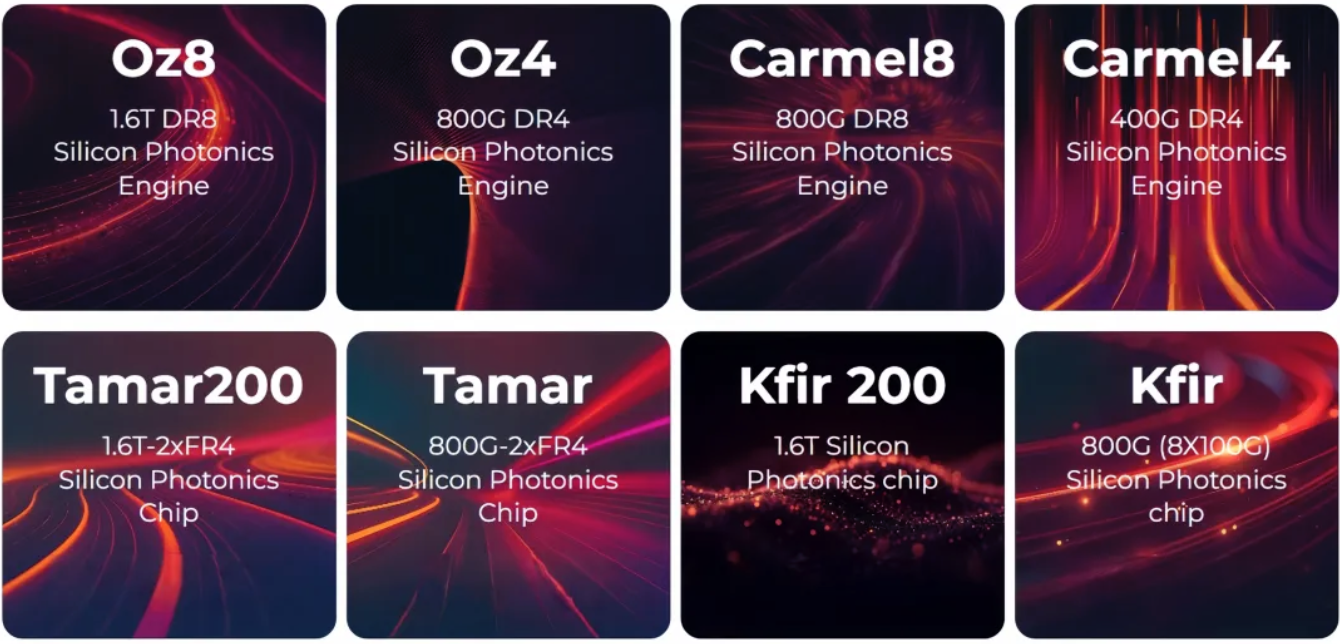
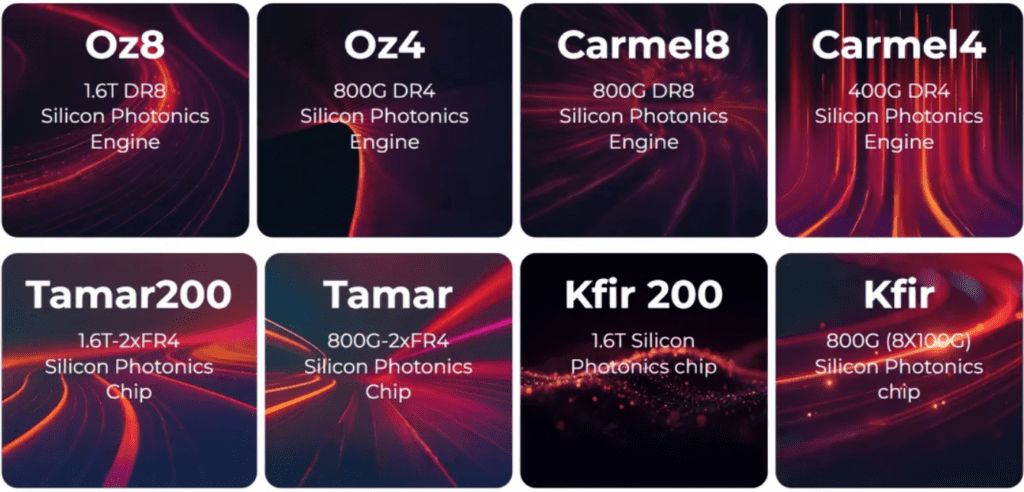
Product matrix: covering 400G/800G/1.6T full series of silicon photon PIC, the road map directly points to 3.2T; the product is suitable for heavy timer / LPO/LRO treceiver, air-cooled / liquid-cooled / immersion cooling module, and long-distance/short-distance full-scene applications.
Commercialization progress: The product has entered the world’s top ultra-large-scale AI cluster supply chain and entered the mainstream project design stage of NPO (near-port optics) and CPO (co-encapsulated optics).
Capital history: 4 rounds of financing have been completed in 9 years of establishment, with a cumulative absorption of more than 82 million US dollars, and a luxurious lineup of investors – Intel Capital, Atreides Management, Exor Ventures and other 13 international institutions blessing.
Financial highlights: Disclosure revenue of $20.1 million, gross margin of 64.77% and net interest rate of 11.95%, showing the profit potential of high-quality technology companies.
Credo’s strategic intention: From electricity to light, build AI interconnection full stack hegemony
For Credo, this acquisition is by no means a simple technical supplement, but a strategic vertical integration, which thoroughly opens up the “electric connection + optical connection” dual track and locks the core card position of AI infrastructure:
- Technical closed loop, complete the last piece of the puzzle;
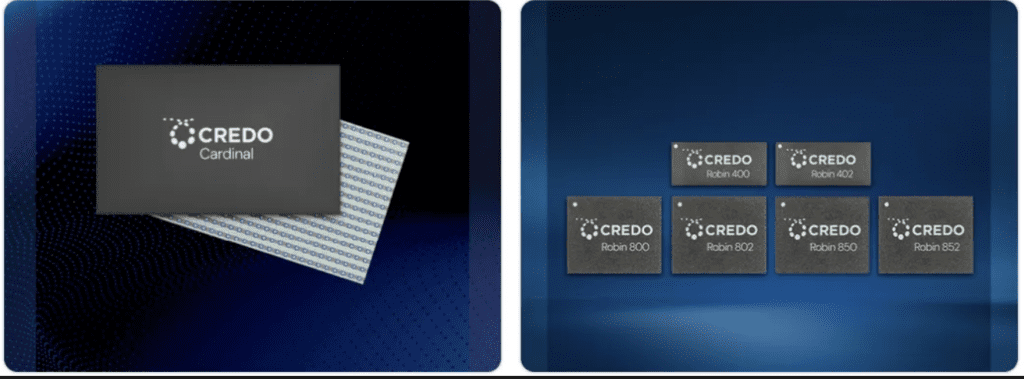
Credo holds the world’s leading SerDes, DSP IP and chips (such as Cardinal 1.6T optical DSP series), and DustPhotonics’ silicon optical PIC is the core component of its ZeroFlap optical trandiver platform. After the acquisition, Credo will have the end-to-end full-stack optical connection capability of SerDes + DSP + Silicon Optical PIC + system integration, completely getting rid of external supply chain dependence.
- Product expansion,Silicon light technology covering 800G-3.2T full-speed DustPhotonics directly enhances Credo’s product portfolio of 800G, 1.6T and 3.2T ultra-high-speed optical interconnection, fully covering the two next-generation architectures of NPO and CPO, and accurately matching AI. Data centers have rigid requirements for high bandwidth, low power consumption and high reliability.
- The market exploded,Lock in $6 billion silicon light track According to LightCounting and Credo, the silicon photonic PIC market will reach $6 billion in 2030. After integration, Credo expects that the revenue of optical communication business (ZeroFlap + optical DSP + silicon optical) will exceed 500 million US dollars in 2027, becoming the company’s second growth curve.
- Cost revolution, scale to reduce costs and increase efficiency
Silicon light PIC integrates the core optical function into a single chip, which can reduce the complexity of components and improve the yield. Especially at a rate of more than 800G, it can achieve a significant reduction in scale and reduce costs, which directly solves the two core bottlenecks of reliability and power consumption of AI cluster deployment.
Behind the $1.3 billion premium is the track card battle of AI optical interconnection.
The valuation of this transaction is not based on the current financial situation and completely bets on the future, highlighting the three major industry trends:
- AI computing power explodes, and optical interconnection becomes a rigid demand: the trillion-parameter model pushes the data center bandwidth to jump to
800G/1.6T, traditional electric connection contact top, silicon light + CPO has become a must-have technology route.
- Vertical integration into the standard configuration of giants: from Brotcom, Cisco to Credo, the industry is moving from “decentralized procurement”
Full-stack self-developed integration, technology closed-loop, cost controllable, and iteration acceleration have become the core competitiveness.
- The head is concentrated and accelerated, and the technology premium is prominent: the technology barrier of silicon light PIC is extremely high, a few players such as DustPhotonics master the core IP, and high-quality technology companies are chased by capital. The valuation of $1.3 billion is the ultimate embodiment of the technological value of the AI era.
With the transaction expected to land in Q2 of 2026, Credo will officially evolve from a “high-speed electrical connection leader” to an AI full-scene connection hegemon, competing head-on with giants such as Broton and NVIDIA in the global super-trillion AI infrastructure market. This technology gamble worth more than 1.3 billion US dollars will not only rewrite the fate of Credo, but also reshape the global optical communication and AI interconnection industry.