
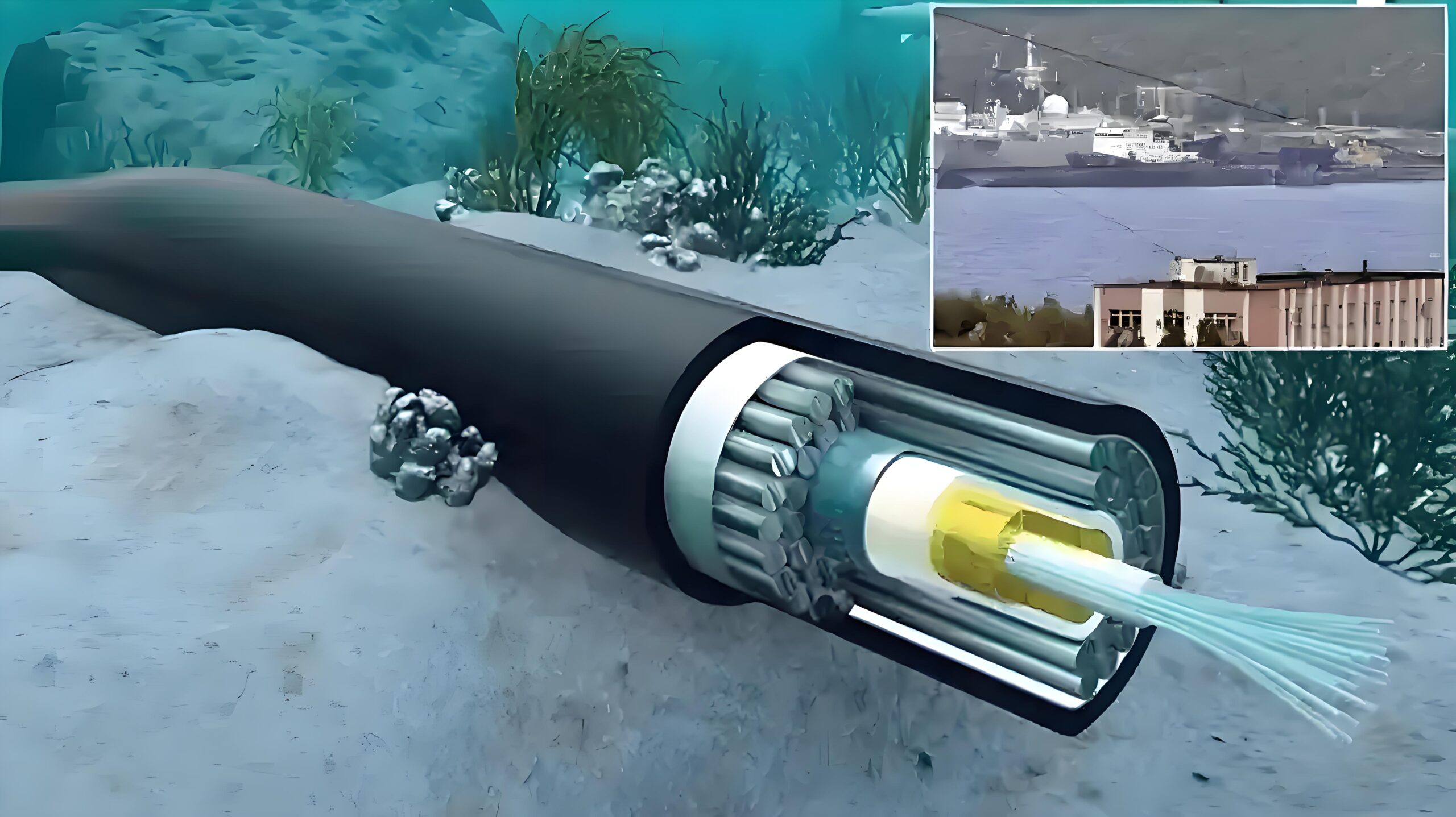
Abtract:
Revolutionizing Communication: The Power of Fiber-Optic Technology
Fiber-optic communication has fundamentally transformed how we transmit information, marking one of the most significant breakthroughs in telecommunications history. By harnessing light as the carrier of digital signals, this technology delivers exceptional performance advantages that far surpass traditional communication methods.
Unlike conventional copper-based systems, fiber-optic networks are completely immune to electromagnetic interference, ensuring crystal-clear signal transmission even in electrically noisy environments. These systems also boast extraordinary data-carrying capacity, enabling the high-speed internet and massive data transfers that power our modern digital world. Perhaps most impressively, optical fibers maintain signal strength over vast distances with minimal loss, making long-distance communication both efficient and cost-effective.
This comprehensive study examines real-world fiber-optic engineering implementations, breaking down the fundamental scientific principles that make this technology possible. Beyond the technical aspects, the research explores the practical challenges facing the fiber-optic industry today, from installation and maintenance hurdles to economic considerations that influence widespread adoption.
Given the critical role fiber-optic networks play in our increasingly connected society—supporting everything from internet infrastructure to financial systems—the paper also addresses crucial security concerns and protective measures needed to safeguard these vital communication lifelines.
Through this multifaceted analysis, readers gain both a deep understanding of how fiber-optic technology works and valuable insights into the complex considerations involved in building and protecting our modern communication infrastructure.
1. Research Background and Significance
With the progress and development of society, as well as people’s growing material and cultural needs, the development of communications towards large capacity and long distances has become an inevitable trend.
Since light has an extremely high frequency, that is, it has an extremely high bandwidth and can accommodate a huge amount of communication information, using light waves as a carrier for communication has been a goal that people have pursued for hundreds of years. Therefore, it is very meaningful to understand the principles of optical fiber systems and think about optical fiber communication issues .
2. Principles of Fiber Optic Communication
Fiber optic communication is a combination of communication technology and optoelectronic technology. It involves the transmission method of light in optical fiber waveguides and the protocols that signal transmission must comply with. The interior of an optical fiber consists of two layers of quartz glass with different optical properties.
When light falls through a light-sparse medium at a certain angle, total internal reflection occurs. Fiber optic communication utilizes this phenomenon to continuously transmit light forward within the fiber. Light itself is also an electromagnetic wave, and electromagnetic waves all satisfy Maxwell’s equations. Different data can be introduced to obtain corresponding solutions. Therefore, in light transmission, different distributions of light signals represent different information carried by the light .
At the transmitting end, fiber-optic communication first converts the transmitted information into an electrical signal. This signal is then modulated onto a laser beam, causing the intensity of the light to vary with the amplitude of the electrical signal.
This signal is then transmitted through the optical fiber. At the receiving end, a detector receives the optical signal and converts it into an electrical signal, which is then demodulated to recover the original information.
3. Problems in Fiber Optic Communication Technology
As telecommunication networks continue to develop, they also put forward new requirements for optical cable products. It is not difficult to find that the structure of optical cables is increasingly dependent on the environmental conditions of use and the specific requirements of construction.
This has been deeply understood in the development of submarine optical cables, shallow water optical cables, ADSS and OPGW optical cables. In the future, the focus of optical cable construction will continue to expand with the construction of access networks and user premises networks. Some countries or companies have gained some experience and are gradually forming new system technology patents.
China country has a large number of users, and access networks and user premises networks have many characteristics. There will be more requirements for access optical cables, which provides us with a good opportunity to research and innovate access networks and user premises networks .
Although my country’s optical cable technology has made great progress in recent years and has some technologies with independent intellectual property rights, our proportion is still very small.
There are 200 optical fiber and cable factories in China, but most of them have a single product, no independent intellectual property rights, low technical content and weak competitiveness. We should make the development of technologies with independent intellectual property rights the top priority of our work and strive to create more optical fiber and cable patents.
4. Protection of the optical path
Although the optical fiber communication transmission system itself has a protection function, in practice, it is difficult to ensure the safety and smoothness of transmission when a complete blockage of the optical cable line occurs by only using the protection management system of the transmission equipment itself.
For example, in an SDH transmission system with a loop self-healing function, if the light transmission is not a real physical optical cable, a blockage of the optical cable line at a certain location may also cause communication interruption of the SDH transmission ring.
Although the optical cable line automatic monitoring system that has emerged in recent years can complete real-time automatic monitoring of optical cables, it cannot prevent sudden blockage of optical cables caused by external forces, nor can it protect the optical transmission system in the optical cable line when a blockage occurs .
If an optical cable is completely blocked or part of its fiber core is blocked, it will cause a long period of service transmission interruption for those optical systems that are not protected by another physical optical cable transmission route.
Fiber optic communication routing protection can be achieved in a variety of ways, mainly including the following protection sections: physical dual routing protection of optical cables introduced to equipment rooms and important customers; physical dual routing mutual protection of optical cables interrupted between communication exchange offices; and WDM transmission mutual protection.
5. Conclusion
The development of fiber-optic communications has revolutionized the way we communicate. Its emergence has directly propelled humanity into an era of rapidly evolving signal systems. Fiber-optic communications have brought numerous conveniences to our lives. However, their advantages extend far beyond these. Given their current development, fiber-optic communications hold even greater promise.